
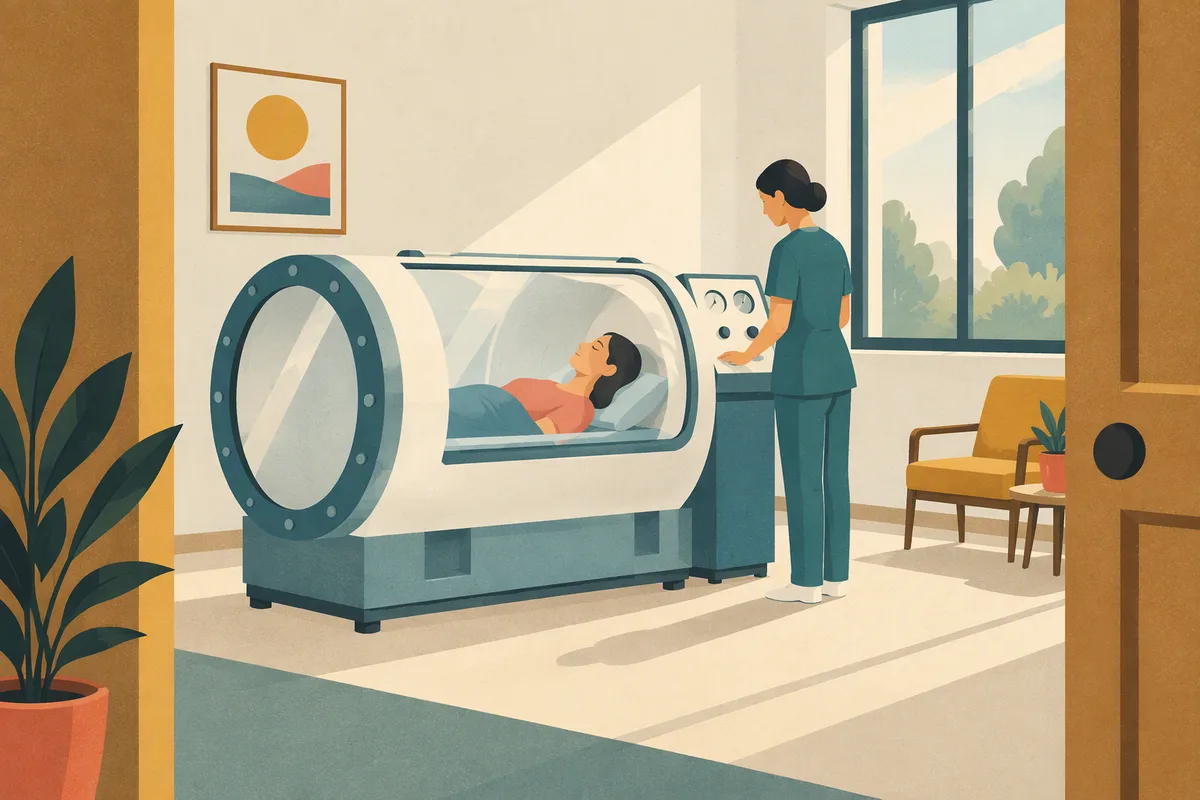
What Is Hyperbaric Oxygen Therapy (HBOT) and How Does It Work?
If you have heard the term hyperbaric oxygen therapy, often shortened to HBOT, you may have wondered what it actually involves. It sounds technical, and it can seem a little mysterious. The basic idea is simple, though: breathing oxygen while in a space where the air pressure is higher than normal.
At PRN Medical by Yana Ryzhakova in Brooklyn, HBOT is one of the services we offer alongside primary care, wound care, IV infusions, and more. This article explains the basics in plain language so you know what to expect and what questions to bring to your visit.
What Hyperbaric Oxygen Therapy Means
The word hyperbaric means higher pressure. In HBOT, a person rests in a chamber where the air pressure is raised above the normal pressure we feel every day. While inside, the person breathes oxygen.
Our bodies need oxygen to work. Every cell uses it for energy, and tissues that are healing often need even more. Normally, oxygen travels through the blood mostly attached to red blood cells. HBOT is designed to change how much oxygen can be delivered, which is the reason people talk about it in connection with healing.
How Does HBOT Work?
Here is the science in simple terms. When air pressure goes up, more oxygen can dissolve into the liquid part of the blood, called plasma. This means oxygen can reach areas that may have limited blood flow, such as tissue around a slow-healing wound.
Extra oxygen in the tissues may support the body's natural repair processes. These include forming new blood vessels and helping the immune system respond to certain kinds of infection. Every person responds differently, and results cannot be predicted ahead of time, so it is best to talk with a clinician about what makes sense for you.
HBOT has long been used in medicine for specific situations, such as decompression sickness in divers, carbon monoxide exposure, and certain hard-to-heal wounds. People also ask about it for wellness reasons. If you are curious about a particular goal, ask us whether HBOT is a reasonable fit for your situation.
What a Session Feels Like
Most people find a session fairly calm. You lie down or recline, the chamber is gradually pressurized, and you breathe normally. As the pressure rises, you may feel a fullness in your ears, much like when an airplane descends or when you drive through mountains. Swallowing, yawning, or gently pinching your nose and blowing can help your ears adjust.
Many people rest, listen to music, or simply relax during the session. The length of a session and the number of sessions depend on the reason for care and on what your clinician recommends, so your plan is built around you rather than a one-size-fits-all schedule.
Safety and Who Should Ask First
HBOT is not right for everyone, which is why a conversation with a clinician comes first. Certain lung conditions, a recent ear or sinus problem, a cold or congestion, fever, and some medications can all matter. Pregnancy and certain past medical events are also worth mentioning. Be ready to share your full health history, including any supplements you take.
Because oxygen supports burning, there are also safety rules about what you can bring into a chamber. Items like lighters, certain lotions, and electronics are usually restricted, and the team will walk you through what to leave outside. Some people feel anxious in enclosed spaces, and it helps to say so ahead of time so you can talk through your comfort.
Possible side effects can include ear pressure, sinus discomfort, tiredness, or temporary changes in vision. Let the team know right away if anything feels off during a session.
Questions to Ask Before You Start
Good questions include: Is HBOT appropriate for my health history? What am I hoping to get out of it? How many sessions might be planned, and how will we check on my progress? How does it fit with the other care I am already receiving?
Because we also offer primary care, blood work, minor wound care, and other services, your team can look at the bigger picture of your health. Ask our team about fees and whether you need a referral. If you have questions about your own situation, give us a call and we will be glad to talk it through.
Questions about your own situation? The team at PRN Medical by Yana Ryzhakova is happy to help — call us at (347) 450-6040 or request an appointment.
This article is for general information only.